The Beginner’s Guide to Potatoes: Varieties and When to Use Them
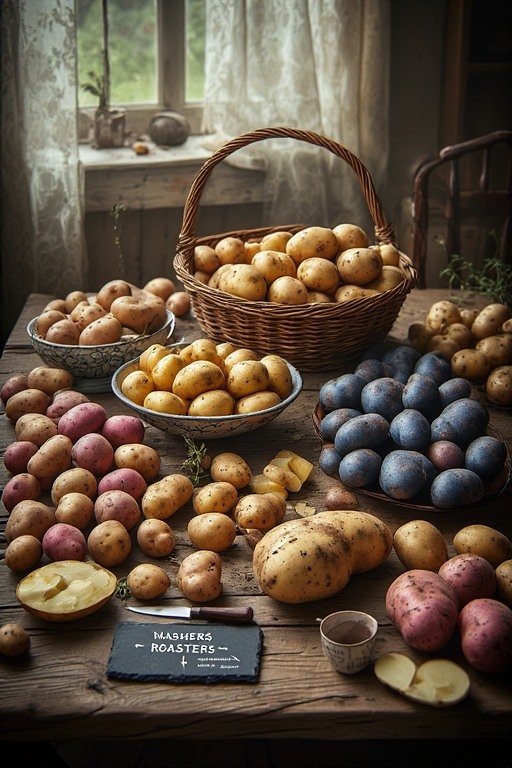
Walk into the produce section of any grocery store, and you’ll see a mountain of different potatoes. Some are dusty and brown, some are bright red, and others are tiny , purple and gold.
If you think a potato is just a potato, you’re in for a surprise! Potatoes actually fall into three main categories based on their texture: Starchy, Waxy, and All-Purpose. Using the wrong potato for a dish can mean the difference between a beautiful, fluffy baked potato and a soggy, gluey mess.
Let’s break down the main varieties so you always know which one to grab.
The Three Main Potato Types
Before looking at specific names, it helps to understand what is happening inside the potato. It all comes down to water and starch.
1. Starchy Potatoes:
These are high in starch and low in moisture. When cooked, their flesh becomes dry, fluffy, and absorbent. They soak up butter and cream like a sponge, but they break apart very easily in water.
2. Waxy Potatoes:
These are low in starch and high in moisture. Their skin is usually thin, and their flesh stays firm, smooth, and intact when cooked. They hold their shape perfectly even if you slice, dice, or boil them.
3. All-Purpose Potatoes:
These sit right in the middle. They have a medium amount of starch and moisture. If you aren’t sure what to buy, these can do a decent job at almost any cooking task.
Potato Breakdown: Variety by Variety
Russet Potatoes (Idahos):
• Type: Starchy
• What they look like: Large, oblong potatoes with thick, rough, brown skin and white flesh.
• Best For: Baking whole, mashing, and making French fries.
• Why they work: The high starch content creates that classic, cloud-like, fluffy interior when baked or mashed.
• When to AVOID them: Do not use Russets for potato salads, soups, or stews. Because they dissolve easily, they will completely break apart in boiling water and leave you with muddy, gritty broth.
Yukon Gold Potatoes:
• Type: All-Purpose
• What they look like: Round or oval with smooth, thin, yellowish skin and distinct light-yellow flesh.
• Best For: Roasting, mashing, boiling, gratin dishes, and soups.
• Why they work: They naturally taste rich and buttery all on their own. They can be mashed into a beautifully smooth texture, but they are durable enough to hold their shape in a soup.
• When to AVOID them: They can do almost anything, but if you want an incredibly dry, ultra-fluffy traditional baked potato, a Russet is still the better choice.
Red Potatoes (Red Bliss):
• Type: Waxy
• What they look like: Small to medium, round shape with smooth, vibrant red skin and white flesh.
• Best For: Potato salad, roasting in wedges, stews, and steaming whole.
• Why they work: The firm, waxy flesh stays intact even after being boiled and tossed with dressing. The thin skins are tender, so you don’t even have to peel them.
• When to AVOID them: Do not try to make traditional mashed potatoes with red potatoes. Because they are low in starch, mashing them too much turns them heavy, sticky, and gluey.
Quick Reference Summary Table
| Potato Variety | Type | Best Cooking Methods | Avoid Using For | Skin Status |
| Russet | Starchy | Baking, Mashing, Frying | Soups, Potato Salads | Peel it (Thick/Rough) |
| Yukon Gold | All-Purpose | Mashing, Roasting, Soups | Universal (Good for all) | Optional (Thin/Tender) |
| Red Potato | Waxy | Potato Salad, Roasting, Stews | Smooth Mashed Potatoes | Leave it on (Adds color) |
If you want it to break down and stay fluffy: Go Starchy (Russet).
If you want it to hold its shape perfectly: Go Waxy (Red).
If you aren’t sure or want a middle ground: Go All-Purpose (Yukon Gold).