The Beginner’s Guide to Fresh Fish
Buying fish can be intimidating, but your senses are your best tools. Whether you are at the fresh counter or the freezer aisle, look for these signs:
1. The Smell: Fresh fish should smell like the ocean—salty and clean. If it smells “fishy,” sour, or like ammonia, it is past its prime.
2. The Eyes: If you are buying a whole fish, the eyes should be clear and bulging, not cloudy or sunken.
3. The Texture: The flesh should look moist and shiny. If you press it with your finger (through the plastic), it should spring back. if the indentation stays, the fish is old.
4. Frozen is Fine: Don’t be afraid of the freezer! “Flash-frozen” fish is often fresher than the “fresh” fish at the counter because it was frozen immediately after being caught.
The Beginner’s Guide to Fish Types
When you’re at a restaurant or a grocery store, fish usually falls into three main categories. Understanding these helps you know what to expect for flavor and texture.
1. Mild & White (The “Entry Level” Fish)
These are perfect for people who “don’t like fish” because they have a very subtle flavor and take on the taste of your seasonings.
• Cod: Thick, flaky, and very mild. Great for fish and chips or baking.
• Tilapia: Very affordable and thin. It cooks extremely fast in a skillet.
• Halibut: A bit more “meaty” and firm. It’s the “steak” of white fish.
2. Rich & Oily (The “Superfood” Fish)
These have a stronger flavor and are packed with healthy Omega-3 fats. They are sturdier and harder to overcook.
• Salmon: Distinct pink/orange color. It’s buttery and stands up well to pan-searing.
• Trout: Similar to salmon but usually a bit milder and thinner.
3. Firm & Meaty (The “Steak” Fish)
These are dense and don’t flake apart as easily. They are often served like a beef steak.
• Swordfish: Very firm and usually sold in thick “steaks.”
• Tuna: Best served seared on the outside; it is very dense and red when raw.
Restaurant Cheat Sheet: What’s What?
• “En Papillote”: Just a fancy way of saying the fish was cooked in a parchment paper pouch.
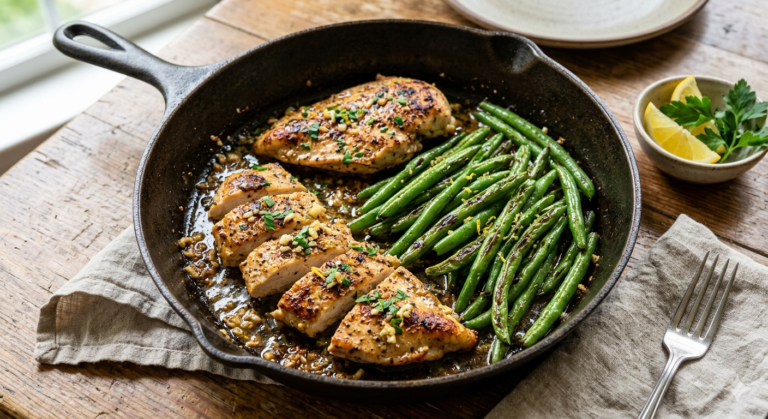
• “Blackened”: The fish was coated in heavy spices and seared at a very high heat (usually in a cast iron skillet like yours!).
• “Wild Caught” vs. “Farm Raised”: Wild fish are caught in their natural habitat; farm-raised are grown in controlled tanks. Both are fine for beginners, though wild often has a deeper color and leaner texture.