All About Pasta: Shapes and Pairings for Beginners
Not all pasta shapes are created equal. While it is easy to think that pasta is just a vehicle for sauce, the shape you choose actually determines how the dish tastes and feels. For a beginner, understanding why a certain pasta pairs with a specific sauce is the secret to moving from “cooking to eat” to “cooking with intention.”
Kitchen Equipment Needed
• Large stockpot (at least 4 to 6 quarts of water)
• Colander or fine-mesh strainer
• Wooden spoon or long tongs
• Measuring cup for water (optional, for saving pasta water)
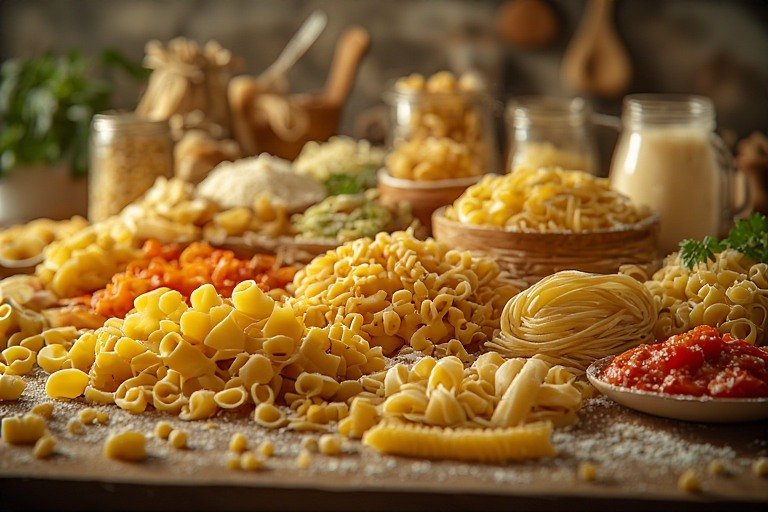
The Pasta Shape Guide: Why Shape Matters
Different sauces cling to different shapes depending on their texture and thickness:
• Long and Thin (e.g., Spaghetti, Linguine, Fettuccine)
o Best for: Smooth, light, oil-based, or thin cream sauces.
o Why: The sauce coats the long strands evenly without clumping up or sliding off.
• Short and Tubular (e.g., Penne, Rigatoni, Ziti)
o Best for: Chunky meat sauces, heavy cream sauces, and baked dishes.
o Why: The sauce gets trapped inside the tubes and in the ridges on the outside, giving you a burst of flavor in every bite.
• Twisted (e.g., Fusilli, Rotini, Cavatappi)
o Best for: Pesto, vinaigrettes, and cold pasta salads.
o Why: The spirals and ridges act like little hooks that capture and hold onto dressings, herbs, and oils.
• Small and Tiny (e.g., Orzo, Ditalini, Macaroni)
o Best for: Soups, stews, and cold salads.
o Why: They cook quickly and fit onto a spoon easily with the other ingredients.
How to Cook Pasta Perfectly
1. Use Plenty of Water: Bring a large pot of water to a rolling boil. Using at least 4 to 6 quarts of water prevents the pasta from sticking together.
2. Salt the Water: Add 1 tablespoon of salt once the water is boiling. This is the only chance you have to season the pasta itself from the inside out!
3. Add the Pasta: Drop the pasta into the boiling water and stir immediately to prevent it from sticking to the bottom or clumping.
4. Test for Doneness: Cook according to the package instructions, but start tasting the pasta 2 minutes before the time is up. It should be al dente—cooked through but still firm to the bite.
5. Drain (Do Not Rinse): Drain the pasta using a colander. Do not rinse the pasta with water; the starch on the outside helps the sauce stick.
The Starch Water Trick: Before draining your pasta, scoop out 1 cup of the boiling, starchy water. If your sauce is too thick, stir in a splash of this water to help it cling to the pasta perfectly.
For Pasta Salad: If you are using pasta for a cold salad, like an Easy Pasta Salad, choose a twisted shape like rotini or fusilli to catch the dressing, and let the cooked pasta cool completely before mixing it with the other ingredients.