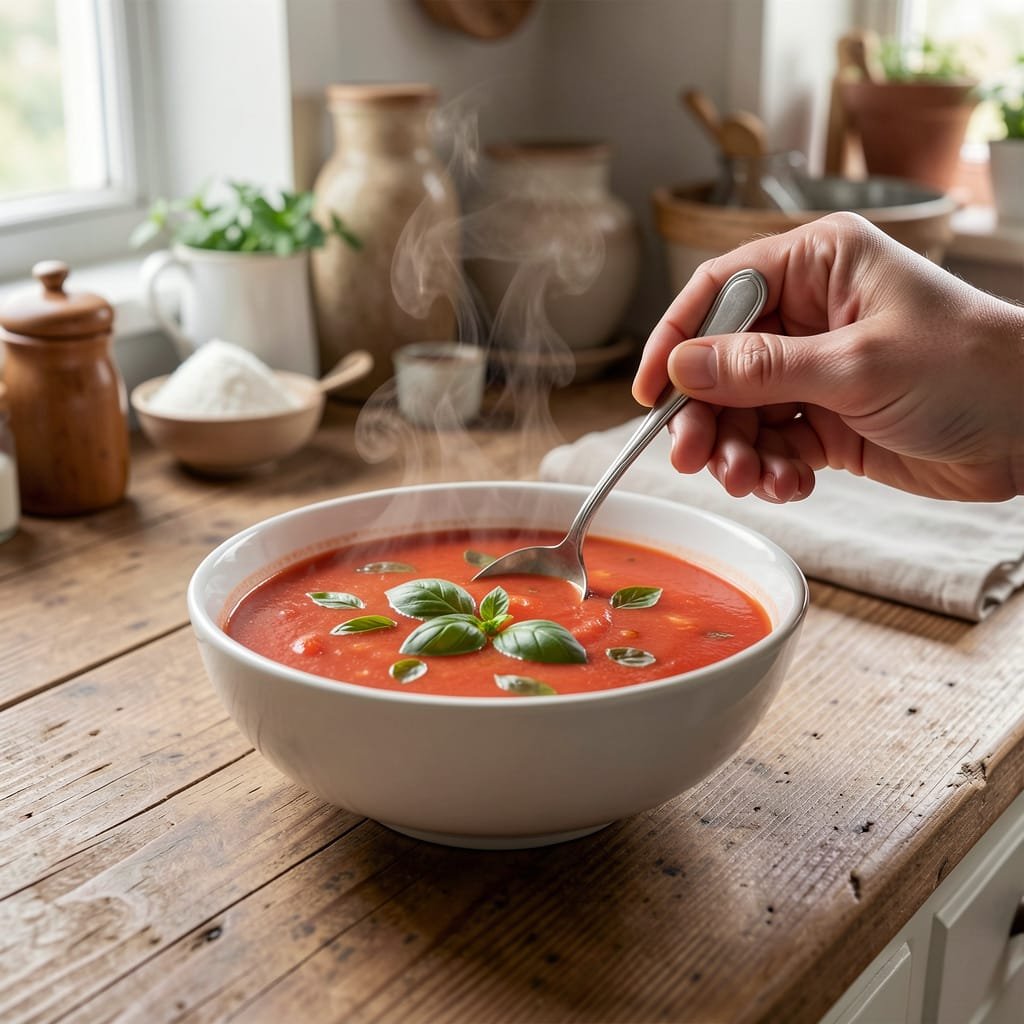
Creamy Tomato Basil Soup
The Skill: The Simmer & The Salt Fix Section Reference: Building on Section 8 (Simmering) and Section 15 (Flavor Balancing)
Why This is Lesson #3
Now that you’ve mastered the oven and the high-heat sauté, it’s time to slow down. This recipe is your “Palate Lab.” Tomato soup is naturally acidic and sharp; your job is to use heat and simple additions to turn it into something smooth and balanced. You will learn how to simmer without burning and how to season until the flavors “pop.”
The Beginner’s Mise en Place
- The Base: 1 can (28 oz) crushed tomatoes (San Marzano style is best for beginners!).
- The Aromatics: 1 small yellow onion (diced) and 2 cloves garlic (minced).
- The Liquid: 1 cup vegetable or chicken broth.
- The Balancers: ½ cup heavy cream (or coconut milk) and 1 tsp sugar.
- The Fresh Finish: A handful of fresh basil leaves (torn or chopped).
- The Fat: 2 tbsp butter or olive oil.
Step-by-Step Instructions
- 1. Softening the Foundation
- In a medium pot, melt the butter over Medium heat. Add the diced onions. Cook for 5–7 minutes until they are soft and translucent, but not brown. Add the garlic for the last 30 seconds.
- Why? We aren’t looking for a “sear” here. We want to sweat the onions to release their natural sweetness, which balances the tartness of the tomatoes later.
- 2. The Gentle Simmer (Section 8)
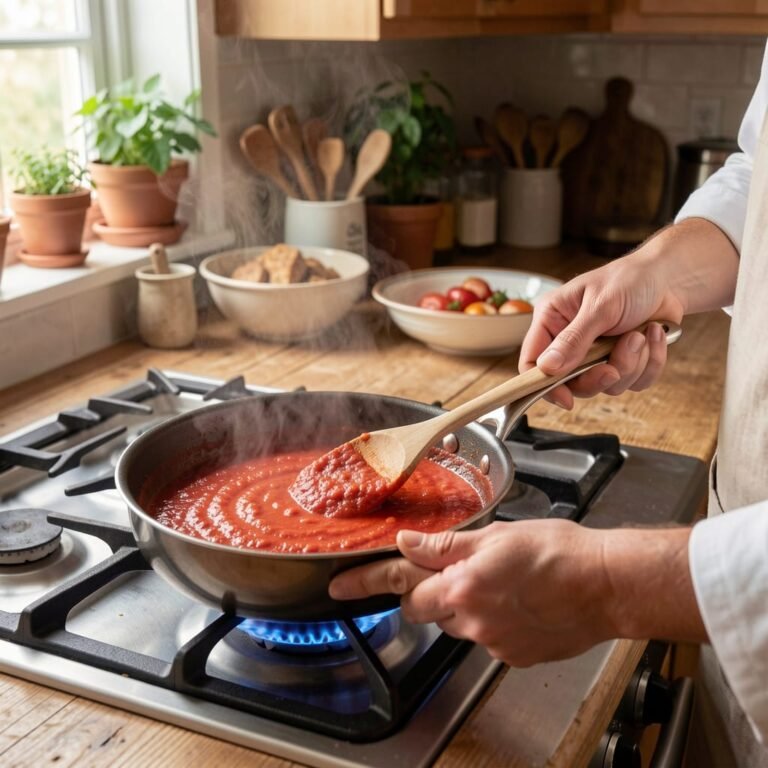
- Add the crushed tomatoes and the broth. Bring the liquid to a tiny bubble, then immediately turn the heat to Low. Let it cook uncovered for 15 minutes.
- Why? A “boil” is violent and can metallic-ize the tomato flavor. A “simmer” is a gentle hug that lets the flavors meld together without scorched bits on the bottom.
- 3. The “Cream” Transformation
- Stir in the heavy cream and the sugar. Watch the color change from deep red to a soft, velvety orange.
- Why? The fat in the cream coats the tongue, making the acid of the tomato feel “smoother” and less sharp.
- 4. The “Salt Fix” (Section 15)
- This is the most important part of the lesson. Taste the soup. Is it flat? Add a pinch of salt. Taste again. Does it need more “brightness”? Add a tiny splash of vinegar or more salt.
- Why? Salt doesn’t just make things “salty”—it acts like a volume knob for flavor. Your goal is to turn the volume up until you can clearly taste the tomato and basil.
- 5. The Finishing Touch
- Stir in the fresh basil right before serving.
- Why? Fresh herbs lose their bright flavor if they cook too long. Adding them at the end keeps the soup smelling like a garden.
Ready for the ultimate test of pan finesse?
[ Mastered the Simmer? Move to Lesson #4: The Classic Beginner Omelet ]