The 4 C’s of Food Safety in Cooking
Cooking with confidence means knowing how to keep yourself and your ingredients safe. This guide covers the absolute basics of cleanliness and safe food handling.
The 4 C’s of food safety in cooking are:
- Cleaning,
- Cross-contamination (avoiding it)
- Cooking
- Chilling
These essential principles, used in both home and professional kitchens, are designed to prevent food-borne illness by ensuring proper hygiene, preventing bacterial spread, cooking to safe temperatures, and storing food correctly.
- Cleaning: Washing hands, surfaces, and utensils often with hot water and soap to remove bacteria before, during, and after food preparation. ALWAYS WASH YOUR VEGETABLES BEFORE CHOPPING!
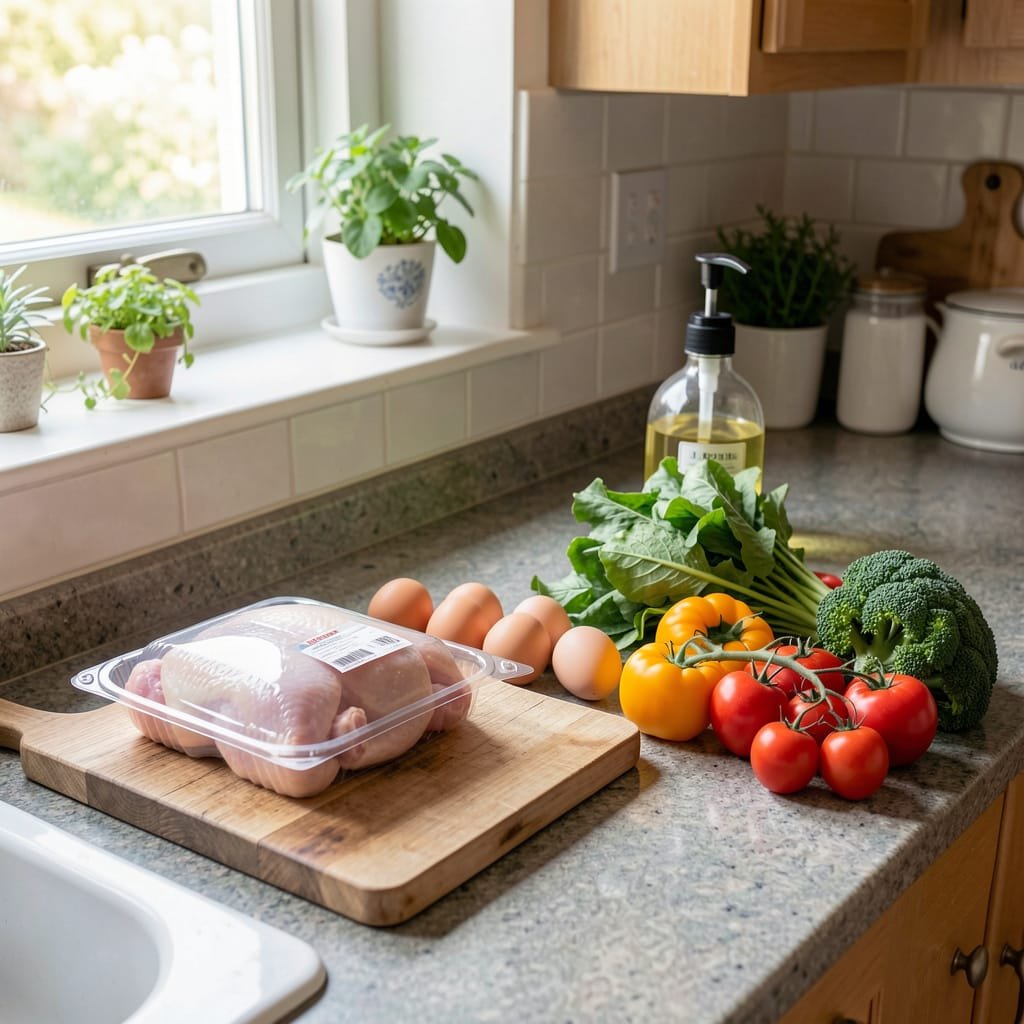
- Cross-contamination (Avoidance): Keeping raw meat, poultry, seafood, and eggs separate from ready-to-eat foods to prevent the transfer of germs, often by using separate cutting boards.
- Cooking:Heating food to the proper internal temperature (generally or as recommended) to kill harmful bacteria, ensuring it is safe to eat.
- Chilling: Storing perishable foods in the refrigerator promptly, typically at 40F (4C) or below to slow the growth of bacteria.
The Golden Rules of Kitchen Safety
• 1. Wash Your Hands Often: Always wash your hands with warm, soapy water for at least 20 seconds before cooking and immediately after touching raw meat, poultry, or eggs.
• 2. Prevent Cross-Contamination: Never use the same cutting board for raw meat or fish and vegetables without washing it with hot, soapy water first.
• 3. Keep a Damp Towel Handy: Place a damp paper towel or kitchen towel under your cutting board to keep it from slipping while you chop.
• 4. Let Hot Steam Escape Safely: When removing lids from hot pots or pans, tilt the lid away from your face to prevent steam burns.
• 5. Know When Meat is Done: Don’t guess! Use a digital instant-read thermometer inserted into the thickest part of the meat to ensure it is cooked to a safe internal temperature.