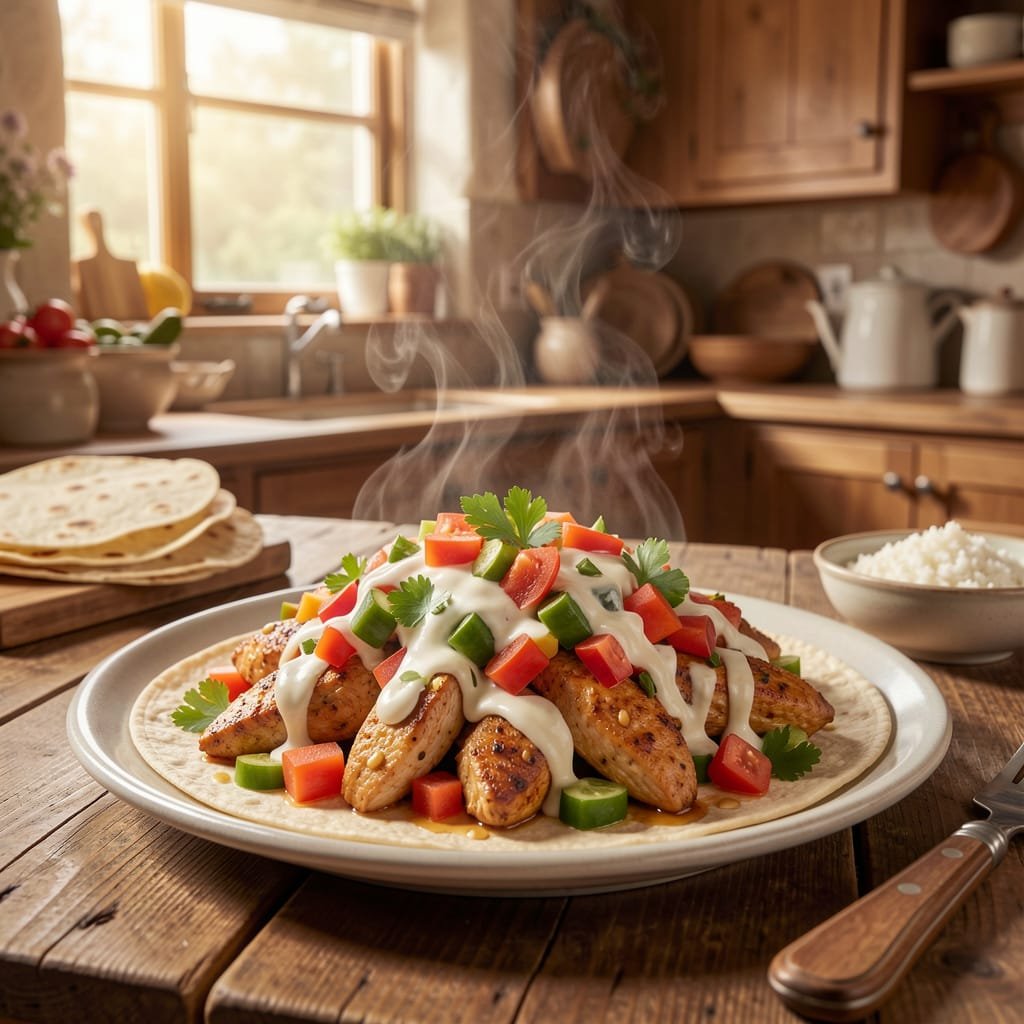
Recipe #5: Sheet-Pan Rainbow Fajitas
The Skill: The Knife Skills Challenge Section Reference: Building on (Slicing & Julienne)
Why This is Lesson #5
You’ve mastered heat, timing, and balancing flavors. Now, we focus on the most important tool in your kitchen: The Knife. To make great fajitas, everything needs to cook at the same rate. This requires “Uniformity.” This lesson is a fun, low-stakes way to practice your Slicing and Julienne techniques. By the time you’re done prepping these “rainbow” strips, your confidence with a blade will be 10x higher.
The Beginner’s Mise en Place
- The Protein: 1.5 lbs chicken breast or flank steak (sliced into thin strips).
- The Rainbow: 3 Bell Peppers (one red, one yellow, one green).
- The Aromatics: 1 large white onion.
- The Binder: 2 tbsp olive oil and 1 lime (juiced).
- The Spice Blend: 1 tbsp chili powder, 1 tsp cumin, 1 tsp garlic powder, and a heavy pinch of salt.
- The Serving: Warm tortillas, avocado, and cilantro.
Step-by-Step Instructions
1. The “Claw” and the “Slide”
Slice the top and bottom off your peppers, remove the seeds, and lay them flat. Use the “Claw” grip to hold the pepper and slice them into long, thin strips (Julienne). Do the same with the onion.
Why? If one pepper strip is thick and another is paper-thin, the thin one will burn before the thick one softens. Consistency in your cut equals consistency in your cooking
2. Grain Management
When slicing your chicken or steak, look for the “grain” (the lines in the muscle). Always slice perpendicular to those lines.
Why? Cutting “against the grain” breaks up the tough fibers, making the meat melt-in-your-mouth tender instead of chewy.
3. The Seasoning Toss
Put your meat and rainbow veggies on a large sheet pan. Drizzle with oil, lime juice, and your spice blend. Use your hands to toss everything until the spices are evenly distributed.
Why? The lime juice acts as a “tenderizer” for the meat while it roasts, adding a bright hit of acid that balances the smoky spices.
4. The High-Heat Roast
Spread everything into a single layer and roast at 425°F (220°C) for 15–18 minutes.
Why? We use a higher heat here than in Lesson #1 because we want “char.” We want the edges of the peppers to slightly blacken and the meat to sear quickly so it stays juicy.
5. The Finishing Squeeze
Once the tray comes out, squeeze a fresh lime over everything while it’s still sizzling. Serve immediately with warm tortillas.
The “Starter 5” Graduation
🎓 Graduation: You Are Now a Cook!
Congratulations! By completing these five recipes, you haven’t just made five meals—you’ve built a professional foundation.
You mastered Passive Heat with the Roasted Chicken.
You conquered Mise en Place with the Fried Rice.
You learned to Balance Flavors with the Tomato Soup.
You found your Delicate Touch with the Omelet.
You sharpened your Precision Knife Skills with these Fajitas.
You’ve moved past “following a box” and started understanding the science of food. Your kitchen is no longer a place of guesswork—it’s a place of skill.
You’ve done it! You’ve built the foundation. Now go ahead and explore the available recipes, go back to one of the first lessons and get your skills down. I’ll be here for you if you have questions, and don’t forget to check back because I’ll be adding new content each week. I am happy that you landed on this site so that I can share just a bit of my knowledge and assure you that Home Cooking isn’t intimidating, it’s FUN!