The Classic Beginner Omelet
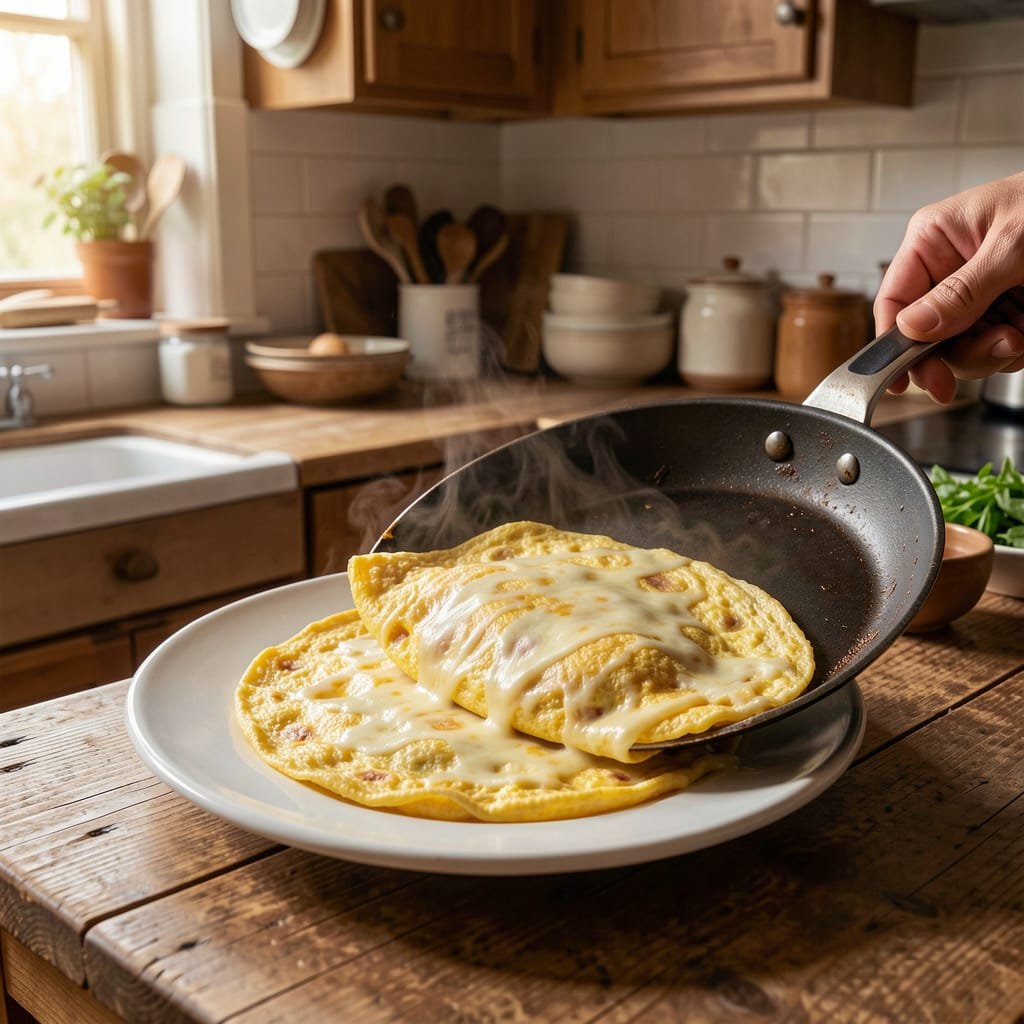
steaming egg and cheese omelet poured from a skillet onto a white plate, country kitchen style.
The Skill: Pan Management & “Medium-Low” Heat Section Reference: Mastering the delicate temperature dial.
Why This is Lesson #4
In the previous lessons, we used high heat to sear chicken and sauté rice. Now, we do the opposite. Eggs are incredibly sensitive to heat; they go from “perfect” to “rubbery” in seconds. This lesson teaches you how to manage your pan so the eggs stay creamy and custardy. If you can fold a perfect omelet without browning the bottom, you have officially mastered your stove’s temperature dial.
The Beginner’s Mise en Place
- The Eggs: 2 to 3 large eggs, cracked into a bowl.
- The Liquid: 1 tsp water or milk (this creates steam for fluffiness!).
- The Fat: 1 tbsp unsalted butter.
- The Filling: ½ cup shredded cheese (keep it simple for your first try!).
- The Tools: A 8-inch non-stick skillet and a silicone spatula.
Step-by-Step Instructions
- 1. The “Air” Factor
- Whisk your eggs and water/milk vigorously until no streaks of white remain and the mixture is slightly frothy.
- Why? Incorporating air now ensures a lighter, loftier omelet later.
- 2. Finding “Medium-Low”
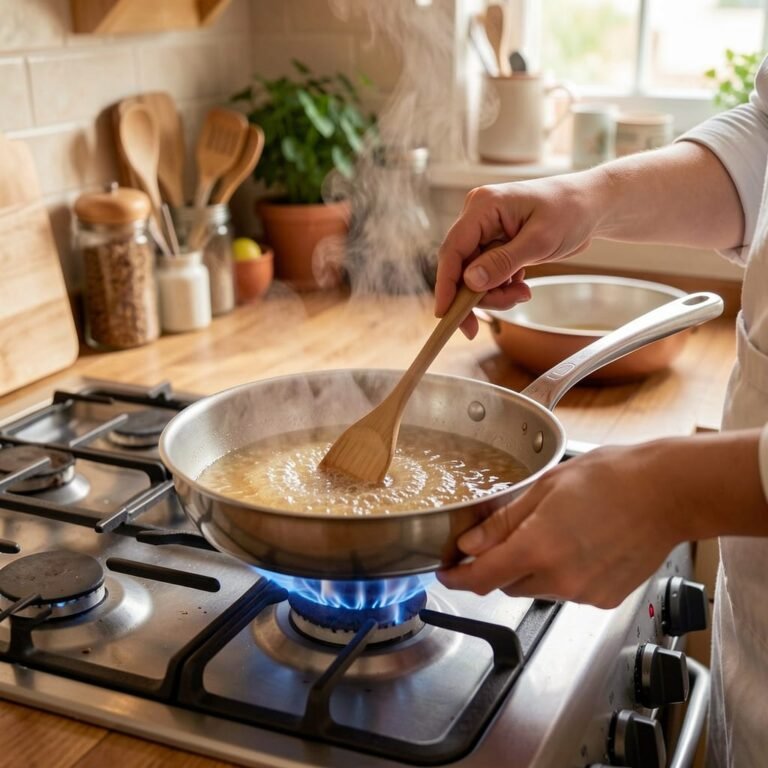
- Place your pan over Medium-Low heat and add the butter. Wait for the butter to melt and start to foam, but do not let it turn brown.
- Why? Brown butter means the pan is too hot. If the butter is silent and foaming, the pan is at the perfect “gentle” temperature for eggs.
- 3. The “Constant Motion” Start
- Pour the eggs into the center of the pan. Use your spatula to gently push the cooked edges toward the center, tilting the pan so the raw egg flows into the empty spaces.
- Why? This creates “curds” and layers, making the omelet thick and fluffy rather than a flat, thin pancake.
- 4. The “Wait and Set”
- Once the bottom is set but the top still looks slightly wet (custard-like), stop stirring. Sprinkle your cheese over one half of the omelet.
- Why? Residual heat is your friend. The eggs will continue to cook even after you fold them and move them to a plate. If they look “dry” in the pan, they are already overcooked.
- 5. The Fold and Slide Slide your spatula under the side without cheese and fold it over. Let it sit for 30 seconds to melt the cheese, then tilt the pan and let the omelet slide gracefully onto your plate
Ready to put your knife skills to the final test?
[ Mastered the Omelet? Move to Lesson #5: Sheet-Pan Rainbow Fajitas ]