“How to Get the Fluffiest Scrambled Eggs of Your Life (Without Extra Ingredients)
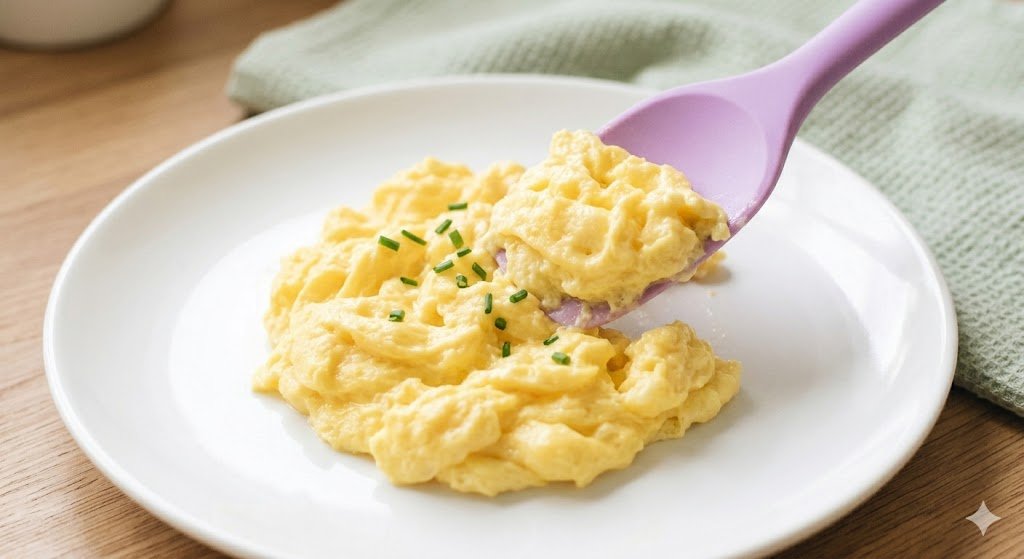
fluffy home-made scrambled eggs with a touch of parsley on top.
| The “Fluffy” Basics | 3-and-3 Steps |
| Step 1: | The “Whip”: Don’t just mix. Use a fork (or a beginner whisk!) to vigorously beat 3 eggs, 1 tbsp water or milk, and a pinch of salt until bubbles form. This incorporates the air! |
| Step 2: | The “Low & Slow”: Use a non-stick skillet on low-medium heat. Add 1 tsp butter. The key is to melt, not sizzle. |
| Step 3: | The “Fold”: Pour the eggs in. Let them set for 30 seconds. Then, using a silicone spatula, gently fold the large curds toward the center. Don’t over-stir! Pull them off the heat when they still look slightly wet. |
The Pro Tip: “Eggs continue cooking after you take them off the heat. If you wait until they look perfectly dry in the pan, they will be overcooked by the time you eat them! Pull them 15 seconds early.”
The “Why Aren’t My Eggs Fluffy?” Troubleshooting Guide
Problem: My eggs are flat and dense.
The Fix: You might not have whisked enough! You need to see actual bubbles in the raw egg mixture before it hits the pan. Those bubbles are trapped air that expands when heated, creating that “fluff.”
Problem: My eggs are “weeping” (watery on the plate).
The Fix: You likely salted them too early or cooked them too long on high heat. Salt pulls moisture out of the eggs. Try salting right before they hit the pan or even just as you start folding.
Problem: My eggs are rubbery or brown.
The Fix: The heat was too high. Eggs are delicate! If the butter sizzles and browns immediately, the pan is too hot. Lower the heat to medium-low—the eggs should gently “set,” not sear.
Problem: I don’t have milk; can I still make them fluffy?
The Fix: Absolutely. A teaspoon of water actually creates more steam than milk, which can lead to even fluffier (though slightly less creamy) eggs.